MiniMax H4 Seedance 2.5 for Longer Scenes with a Clear Direction
Give a scene room to develop with MiniMax H4 Seedance 2.5 on H3 Max. Begin with text, animate an image, or combine visual and audio references around a defined brief. MiniMax H4 Seedance 2.5 offers a four-to-thirty-second canvas for following an action beyond its opening moment, with optional generated sound.
Video workspace
A portrait in flat cartoon colors
12/30View prompt
Use @Video 1 as the source adult woman’s portrait performance. Reinterpret the footage as flat-color cartoon animation with clean outlines, restrained shading, and a simple coherent palette. Follow the existing facial movement, head direction, framing, and background arrangement. Create a five-second interpretation without adding new gestures, extra subjects, camera changes, or written captions.
Introduction
What Is MiniMax H4 Seedance 2.5?
MiniMax H4 Seedance 2.5 is a ByteDance video generation model with text, image, and multimodal reference routes available through fal.
One model, three ways to establish a scene
With MiniMax H4 Seedance 2.5, a written prompt can establish a scene, a starting picture can anchor animation, or a collection of references can guide a new video. The image route also accepts an optional ending frame. MiniMax H4 Seedance 2.5 offers synchronized audio generation, allowing the brief to define both a visual direction and an audible environment.
A workspace for sustained motion
On H3 Max, MiniMax H4 Seedance 2.5 supports 480p and 720p output, durations from four to thirty seconds, and an audio option. Reference mode accepts images, video clips, and audio clips; image mode uses starting and optional ending frames. Choose the input route that matches the evidence you have. A detailed reference collection is useful only when each item contributes something specific to the intended scene.
How to use
How to Create with MiniMax H4 Seedance 2.5
- Input
 Reference image 1STEP 1
Choose the starting route
Select MiniMax H4 Seedance 2.5 and choose text, image, or reference mode. Write a scene for text mode; prepare opening frames or a clearly organized reference collection for the other routes.
- Example settingsSeedance 2.5480p20sPromptOutputSTEP 2
Describe the complete action
Give MiniMax H4 Seedance 2.5 a beginning, a connected movement, and an ending. Identify reference roles explicitly, and add an ending frame in image mode when a particular destination matters.
- Illustrative preview
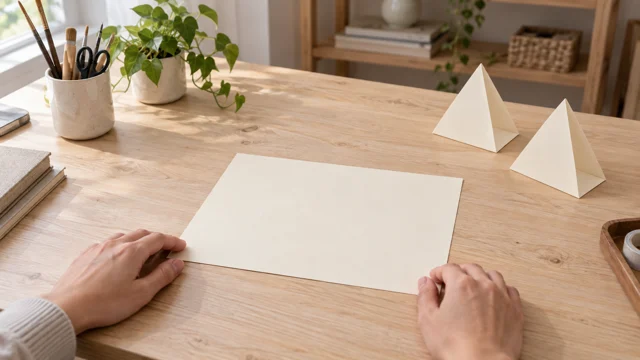
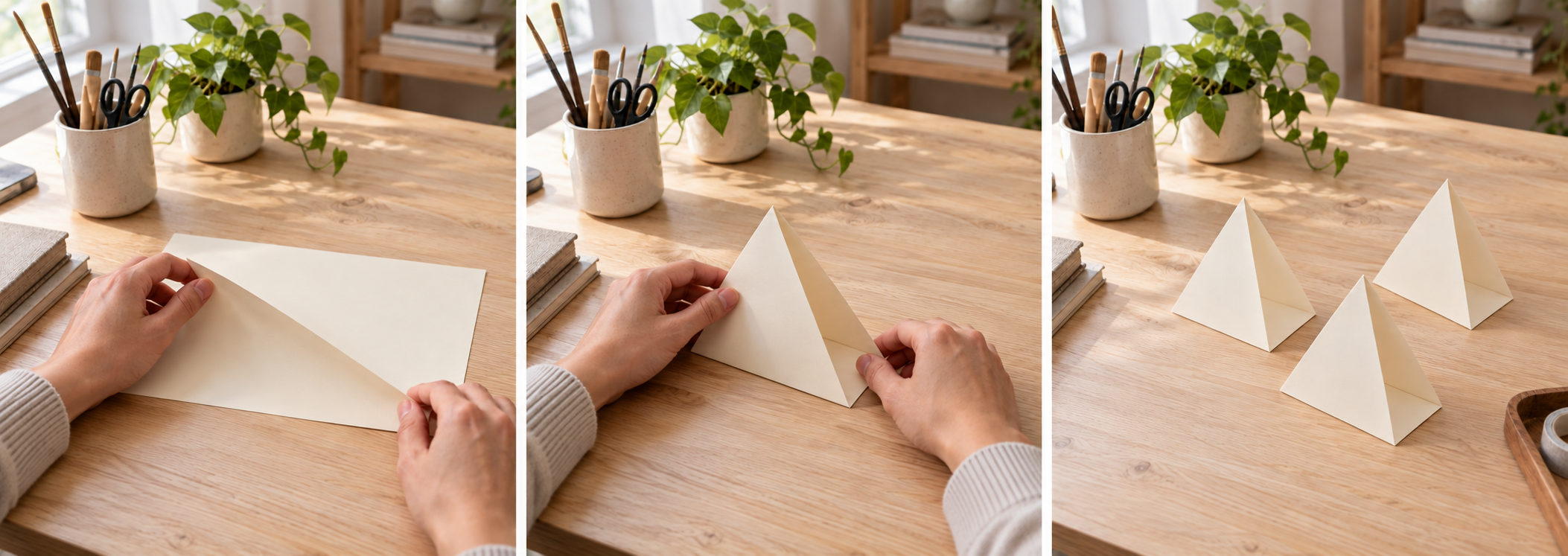
Plan one continuous sequence: start the fold, form the stand, then leave the completed arrangement.
STEP 3Set the generation options
Choose four to thirty seconds, 480p or 720p, and your audio preference. Review the MiniMax H4 Seedance 2.5 workspace credits after the settings and reference inputs are ready.
- STEP 4
Inspect and refine the take
Watch the MiniMax H4 Seedance 2.5 result from start to finish, then review its sound and important details. Keep successful decisions and revise one specific problem in the next request.
Features
Let the Action Develop with MiniMax H4 Seedance 2.5
Use the longer duration range of MiniMax H4 Seedance 2.5 to show progression, rather than simply prolonging an otherwise finished movement.
Write a sequence of connected changes
For a workshop scene, describe a sheet of paper being positioned, folded, and set beside the finished pieces. Keep the same surface, hands, and lighting throughout the brief. MiniMax H4 Seedance 2.5 can be directed toward a continuous take in which each action follows the previous one. Establish the purpose of the movement before specifying atmosphere, and avoid asking for several unrelated locations within the same shot.
Give the middle of a MiniMax H4 Seedance 2.5 clip a purpose
An extended shot needs more than an attractive beginning and ending. Tell MiniMax H4 Seedance 2.5 what should remain engaging during the middle: a gradual reveal, a changing reflection, or a subject reaching a destination. Allow a short pause after the important event. Review the complete MiniMax H4 Seedance 2.5 result for wandering motion, sudden substitutions, or an ending that arrives before the action has become understandable.
Assign Reference Roles in MiniMax H4 Seedance 2.5
Build a reference brief for MiniMax H4 Seedance 2.5 that distinguishes appearance, movement, and sound instead of presenting an unexplained pile of files.
Assign distinct roles to MiniMax H4 Seedance 2.5 references
Choose an image for the subject, another for the location, and a video only when its movement contributes to the brief. MiniMax H4 Seedance 2.5 references should complement each other rather than compete over lighting or clothing. Specify which contribution comes from which input. Ask MiniMax H4 Seedance 2.5 to use a clip for pacing without importing its background, or a picture for materials without copying its composition.
Keep the collection within useful limits
Reference mode supports up to thirty images, ten videos, and ten audio files, with fifty files total. These are ceilings, not a suggested upload list. MiniMax H4 Seedance 2.5 audio references must accompany at least one image or video. Start with the smallest collection that explains the task, remove contradictory alternatives, and observe the workspace validation for file sizes, formats, and reference clip lengths.
Connect Two Compositions with MiniMax H4 Seedance 2.5
Starting and ending frames give MiniMax H4 Seedance 2.5 image mode a visible departure point and destination for a planned transition.
Begin with a frame that supports movement
Leave enough room around the subject for the action you describe. A tightly cropped opening can make a wide camera movement difficult to interpret. With MiniMax H4 Seedance 2.5, use the prompt to explain what changes between frames: an object moving into place, a light revealing a surface, or a camera approaching a display. Keep the instruction focused on motion rather than restating every visible detail.
Plan a compatible MiniMax H4 Seedance 2.5 destination
A final picture should agree with the opening about the subject and the scene. Ask MiniMax H4 Seedance 2.5 for a restrained transition when only the camera position changes; describe an actual transformation when the object changes shape. Matching endpoints do not guarantee a flawless path between them. Inspect the middle of the MiniMax H4 Seedance 2.5 clip for bending geometry, unexplained additions, and changes to recognizable markings.
Plan the Sound Alongside MiniMax H4 Seedance 2.5 Motion
The audio option lets MiniMax H4 Seedance 2.5 accompany the scene with generated sound, while keeping a silent version available when needed.
Specify an audible cause and effect
Describe a sound in relation to an event: paper rustling during a fold, water touching a basin, or footsteps stopping beside a doorway. MiniMax H4 Seedance 2.5 sound direction is easier to evaluate when it has an obvious visual cause. Avoid filling every moment with music, speech, and effects at once. Give MiniMax H4 Seedance 2.5 one dominant sound and a quieter background appropriate to the setting.
Listen independently of the picture
After watching the scene, listen again without concentrating on its appearance. A convincing image can distract from an unwanted voice or a poorly timed effect. With MiniMax H4 Seedance 2.5, treat dialogue as something to inspect, not a promise of verbatim delivery. Turn audio off when you need to build the soundtrack separately, and keep reference audio distinct from a requirement to reproduce a recording exactly.
Review a Complete MiniMax H4 Seedance 2.5 Take
Choose 480p or 720p for the intended use, then judge MiniMax H4 Seedance 2.5 on continuity as well as individual frames.
Evaluate the scene before increasing detail
A successful shot needs a readable subject, plausible movement, and an ending that serves the brief. Use MiniMax H4 Seedance 2.5 to test those decisions before treating resolution as the main creative choice. More output pixels do not repair a missing action. Examine the clip at its intended viewing size, including any planned crop, and leave essential information away from areas an editor may later remove.
Revise one observable failure
Compare the result with the brief and name the smallest useful correction. Ask MiniMax H4 Seedance 2.5 for a slower approach, a quieter background, or less secondary movement instead of replacing every instruction. Keep the reference order stable while evaluating that change. Before another MiniMax H4 Seedance 2.5 request, check the duration, output resolution, audio setting, and workspace credits so the next comparison starts from a known configuration.
Example prompts
Text: a paper craft sequence
One continuous twenty-second shot across a bright paper studio. A pair of adult hands positions a cream sheet, folds it into a simple triangular stand, and places it beside two completed stands. Keep the table, paper color, and daylight consistent. Camera remains at a gentle oblique angle. Quiet paper rustling and room ambience, no dialogue or music. Finish with the hands leaving the arrangement.
Image: a gradual exhibition reveal
Use the supplied first image as the opening composition and the supplied last image as the destination. Over twelve seconds, move gently toward the central sculptural display while preserving the objects, wall texture, and warm side lighting. The display remains stationary. Avoid new visitors, text, or decorative elements. Let the final composition settle briefly. Soft gallery room ambience without speech.
Reference: a coordinated scene brief
@Image1 defines the ceramic vessel and its surface. @Image2 defines the studio setting and color palette. Use @Video1 only as guidance for the slow camera movement, not for its subject or location. Create one fifteen-second shot around the stationary vessel. Keep its base grounded and its silhouette recognizable. Subtle room ambience, no dialogue, captions, or added objects.
User reviews
MiniMax H4 creator workflow examples.
MiniMax H4 creator workflows

Create a short MiniMax H4 game scene using a character reference and a clear action. Compare the generated character, interface details, and motion with the source before using the result.

Explore an animation look in MiniMax H4 with a focused visual brief. Keep a style reference, test one motion at a time, and inspect consistency between shots.

Use product photographs to plan a MiniMax H4 listing video. Review the actual packaging, visible labels, and generated audio; assess campaign results using your own measurements.

Prepare a short MiniMax H4 vertical video with one subject and one visible change. Choose the ratio, preview the complete clip, and revise the prompt before publishing.

Choose an available editing model in MiniMax H4 and describe the intended change. Check preserved details, lighting, and frame continuity against the original recording.

Build a MiniMax H4 shot study before a shoot. Describe framing and camera movement, review each draft, and keep the result as a planning aid rather than a guarantee of the final shot.
MiniMax H4 Pricing and Credit Plans
Cancel anytime
Lite
50% off0.025 / credit
Billed $179 yearly· Save $179.8
Video Models



Image Models



- Includes MiniMax H4 and all premium models
- Up to 1 batch generation task
- Standard generation speed
- Standard generation success rate
- Standard customer support
- Commercial Use License
Standard
50% off0.017 / credit
Billed $299 yearly· Save $299.8
Video Models
Image Models
- Includes MiniMax H4 and all premium models
- Up to 4 batch generation tasks
- Priority processing speed
- High generation success rate
- Priority customer support
- Commercial Use License
Pro
50% off0.014 / credit
Billed $599 yearly· Save $599.8
Video Models
Image Models
- Includes MiniMax H4 and all premium models
- Up to 10 batch generation tasks
- Fastest generation speed
- High generation success rate
- Dedicated account manager
- Commercial Use License
Max
50% off0.012 / credit
Billed $1,199 yearly· Save $1,199.8
Video Models
Image Models
- Includes MiniMax H4 and all premium models
- Up to 10 batch generation tasks
- Fastest generation speed
- High generation success rate
- Dedicated account manager
- Commercial Use License
Pay safely and securely with























FAQ
Frequently asked questions
How long can a MiniMax H4 Seedance 2.5 clip be?
On H3 Max, choose a duration from four to thirty seconds. A longer setting gives the action more time, but the prompt still needs a clear progression. Use only the time required to show the intended event.
Which resolutions does this page support?
MiniMax H4 Seedance 2.5 offers 480p and 720p in this workspace. Select the output size appropriate to your current task and review the displayed credits. Do not assume that a higher resolution will correct subject changes or unsuccessful motion.
Can MiniMax H4 Seedance 2.5 use both a first and last frame?
Yes. Image mode starts from your opening image and accepts an optional ending image. Describe the motion connecting them, and use compatible subjects, lighting, and framing when you want a continuous transition rather than a transformation.
How many reference files can I supply?
MiniMax H4 Seedance 2.5 reference mode allows up to thirty images, ten video clips, and ten audio clips, with fifty files overall. Upload only relevant inputs. The workspace also checks media requirements beyond the number of files.
Can I generate from audio references alone?
Not in MiniMax H4 Seedance 2.5 reference mode. Audio references require at least one image or video alongside them. Use a visual input to establish the scene, and explain how the supplied audio should inform the requested result.
Does MiniMax H4 Seedance 2.5 require generated audio?
No. Use the audio option to choose whether the video includes generated sound. When sound is enabled, describe the desired ambience or events. Review any speech and synchronization before using the result in a finished project.
Where do I check the generation cost?
The MiniMax H4 Seedance 2.5 workspace displays credits for the selected configuration before submission. Review that quote after changing settings or inputs. This page does not replace the current workspace quote with a fixed per-video price.
CTA
Give MiniMax H4 Seedance 2.5 a Scene Worth Following
Choose your starting point, describe the progression, and review the credits. Bring a focused brief to MiniMax H4 Seedance 2.5 on H3 Max, then inspect the full take before selecting it.
Create Your Video